


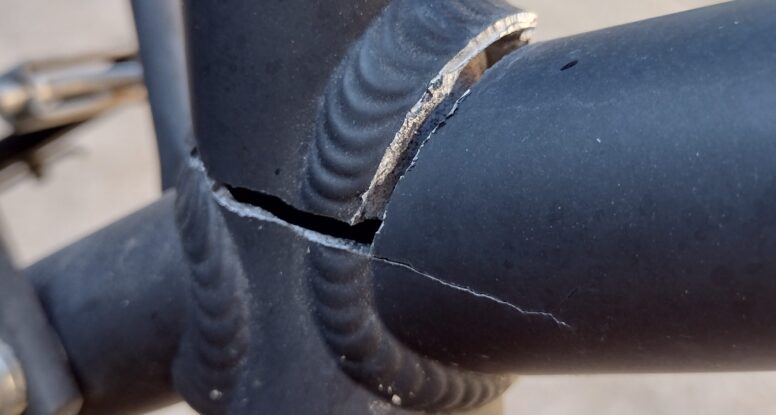
Well….No bike ride today.
That’s okay. By rough estimate, from March of 2020 at the start of lockdown till today, I’ve ridden:
Well….No bike ride today.
That’s okay. By rough estimate, from March of 2020 at the start of lockdown till today, I’ve ridden:
I never know whether to blog about my DIY projects, but this one got a big reaction when I mentioned it online, so here goes.
As I mentioned in an earlier post covering the wiring, we have a lot of power outages in Texas which, between ice, heat, hurricanes, and the buried utilities in my neighborhood, are inconveniently long and frequent. So….more and more folks ’round these parts are getting backup generators, but I don’t want to pay the cost of a new car for a whole-house natural gas backup system I don’t really need, hope never to use, and will need a maintenance contract to keep ready in case I do. I really only need enough juice to keep one room habitable, the food cold, and the wifi running. A simple portable generator can do that, and for a WHOLE lot less money, I just need it set up and standing by when I need it–no dragging it out to the yard, erecting a rain shield, and trying to feed heavy gauge power cords in through the windows.
Whole house generators are usually connected to a home’s mains wiring through an automatic cutoff switch. I didn’t do that because it’s expensive, requires a licensed professional, and is not very practical for a generator barely powerful enough to power one of the twenty circuits in the house. Instead, I wired up a completely separate emergency power system with outlets behind the frig, in the living room, in the office, and in the bedroom where the wifi lives. It’s much easier for the family to understand that the generator can run one portable AC or heater, the frig, and a few lights and computers, when plugged into the emergency outlets.
I documented the electrical work here. This post is about the generator.

I was asked by to moderate “The ArmadilloCon Story Game” as part of ArmadilloCon 2023, a spec-fic literary convention in which at least two panels were concerned with AI, so I decided to employ AI to facilitate the Mad Lib style brainstorming of this classic con game:
First, I asked ChatGPT for a selection of Mad Lib-style prompts suitable for the game and a science fictional story. Then I asked the audience for an Adjective, a superpower, a weakness, and the name of a planet.
Patrice Sarath and Michelle Muenzler brainstormed with input from the audience, while I moderated, transcribed, and interacted with the AI “Sudowrite” which works by accepting starting text, then suggesting two prose alternatives, one of which was chosen before inserting more prose and requesting more generates ideas and so on until the story is done. Here is what we came up with AI inspiration and human brainstorming and editorial clean up in the span of about 40 minutes…
Beginning prompt: Stupid aliens from the planet Garbanzo have invaded Earth. They possess incredible invisibility abilities that challenge humanity’s dog allergies. Jennifer and her dog, Nefertiti discover the evidence of the alien’s interference when Jennifer starts sneezing and some unseen someone says “bless you.”
1982, January 5th:
Jennifer rubbed her nose, trying to stifle another sneeze. “Nefertiti, did you hear that?” she whispered to her dog. “Someone said bless you, but I don’t see anyone here.”
Nefertiti’s ears perked up, and she began to sniff the air. Jennifer watched as her dog’s nose twitched, trying to pick up any scent of the invisible interloper.
Suddenly, Jennifer felt a tickle in her throat, and she let out a series of violent sneezes. “Achoo! Achoo! Achoo!”
As she wiped her nose with a tissue, Jennifer noticed a small, shimmering object floating in the air. The object seemed to be reflecting the light in the room, making it slightly visible to the naked eye.

For months, I’ve been fairly quite. I lot has been going on. Cheifly, I’ve been working on an anthology for Baen Books. It’s been a LOT of work, far more than I’d anticipated, not just writing and reading slush and editing, but tracking down information and conducting interviews and looking up quotes for epigraphs, and simple logistics–keeping track of invited authors, contracts, bios, and a thousand little details. But I’m pretty proud of the results. It’s in Baen’s capable hands. I think you’ll like it.
Baen Book’s new anthology, Real Stories of the United States Space Force, is a collection of science fiction stories and fact articles illustrating the real-world need for space defense and dispelling misconceptions about the nation’s newest military service branch.
13 Award-winning authors!
16 Original stories!
5 Fascinating articles!
Foreword by “Star Wars” (SDI) Chief Engineer of Space Based Laser, William F. Otto.
Contributions by nationally syndicated editorial cartoonists, Dave Granlund and Phil Hands.
Science is like an archer getting closer to the target with practice—and an ever-improving view of the remaining discrepancy. That the aim varies as it zeroes in does not make it wrong along the way—and only a fool would think so.
Estimates for the age of the Earth have evolved over time as new scientific methods have been developed and as new data has been collected.
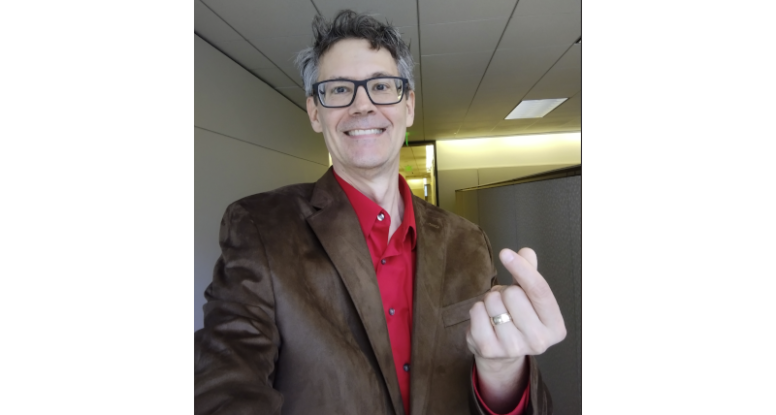
Today I spent the day with my new boss, a woman I first met near the start of my IT career when she, then a newly-hired contractor, was appointed business liaison for what turned out to be a highly successful software application I was designing. At lunchtime, we got to chatting and our conversation turned to my boss way back then, Frank, among the most brilliant, capable, and just plain decent human beings I have ever had the pleasure to know.
I will not waste your time detailing all the kind things Frank did for me or taught me over my years under his wing, except that a lot of it was not strictly work-related, the sort of thing my father might have impressed on me had my parents not divorced and my father had not been away most of the time on Air Force duty and, frankly, had been a better man.
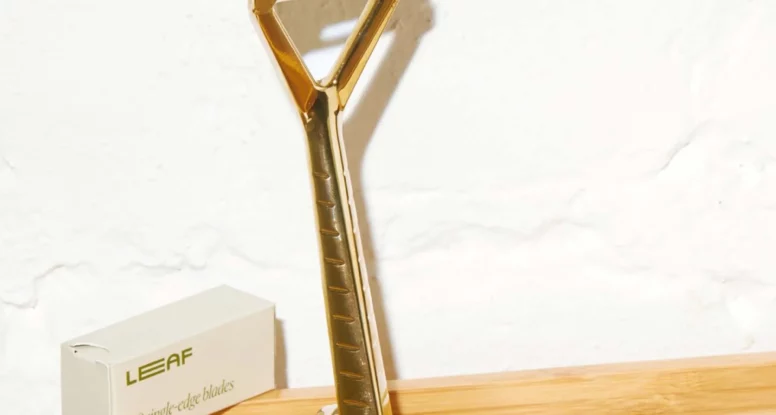
Today, for the first time in a long time, I tried out a new product I was genuinely excited to get hold of.
Capitalism is not, as many millennials think, the root of all evil. Neither, as many boomers seem to think, is it the garden of all virtue. There is a balance to be found between public and private interests, and between innovation and foolish obfuscation. The shaving business is a case in point.
If you’re under 40 and don’t have an MBA, you may not be aware that the shaving razor business is a scam so well known it’s part of the Harvard curriculum. It works like this. Give away an attractive razor for cheap or for free, then make a profit selling the owner proprietary replacement cartridge blades that you somehow convince them are better in some way than the crazy cheap standard blades they were using before. Bonus dollars if you hook them young enough they never used the cheaper alternative, or still think of it as grampa’s old school. Why buy 50 blades for $9 when you can buy two for $10 and get half the performance? Ah, but the packaging is so manly and sleek, like what Captain Kirk would get his condoms in.
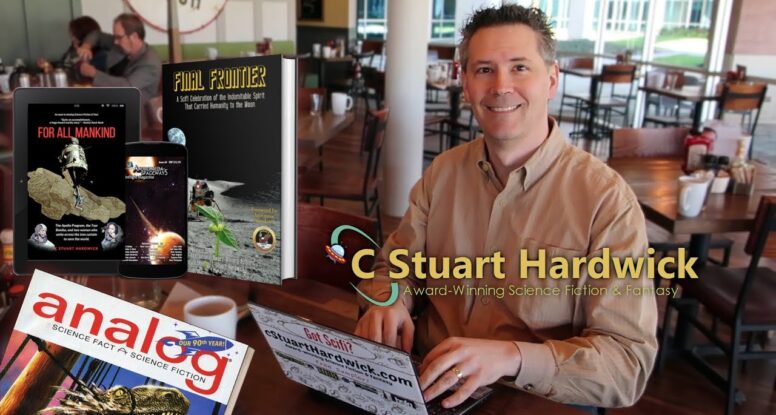
While prepping for a recent “Pay it Forward Day” presentation, I stumbled on a useful analogy: submitting creative work for sale is a bit like dating.
It’s tempting when a submission doesn’t work out, to think something like a teenager who just got ghosted by the hottest kid in the “in crowd”, to think “I wish I knew why they didn’t like me, then I could change.” You might even be tempted to respond to a purchasing editor asking exactly that. Don’t. Don’t, because you are selling yourself short. Don’t because you’ll look like a pestering kid asking “but why don’t you like me? Why? Why?”
The reality is, rejection of your story is like rejection after a date. It just means that story isn’t the right fit for that editor at that moment.
More people should be using LibreOffice. Why? Because word processing is a mature technology, as mature as the doorknob, and there is no reason to keep paying tech companies like Microsoft increasingly exorbitant protection money as if we needed or wanted them to “improve” it–all the while making it easier for them to spy on us and sell us crap we don’t want. Capitalism is a powerful driver of progress, but sometimes that progress is, as C.S. Lewis put it, called “going bad.”
This isn’t 1988. Word processing doesn’t need anything but bug fixes and refinement between now and whenever the next revolution in AI or human biology renders the whole idea moot, and well-supported open-source software is safer than commercial software specifically because it’s open. More eyes are looking at the code with more detachment. It’s also a bit like a good Credit Union, driven by the needs of the community rather than the profits of a few oligarchs. So stop paying that monthly subscription and download LibreOffice for free. Go. We’ll wait.
But when you do, you’ll naturally find there’s a learning curve. That’s where I can help. I’m starting a series to share what I’ve learned as I’ve made the transition over the last decade or so.
In this post, the Libreoffice Macro facility and how to easily use it to do something super useful with no difficulty at all: Make Libreoffice Write open the last document you edited to the last spot you were at when you closed it.